
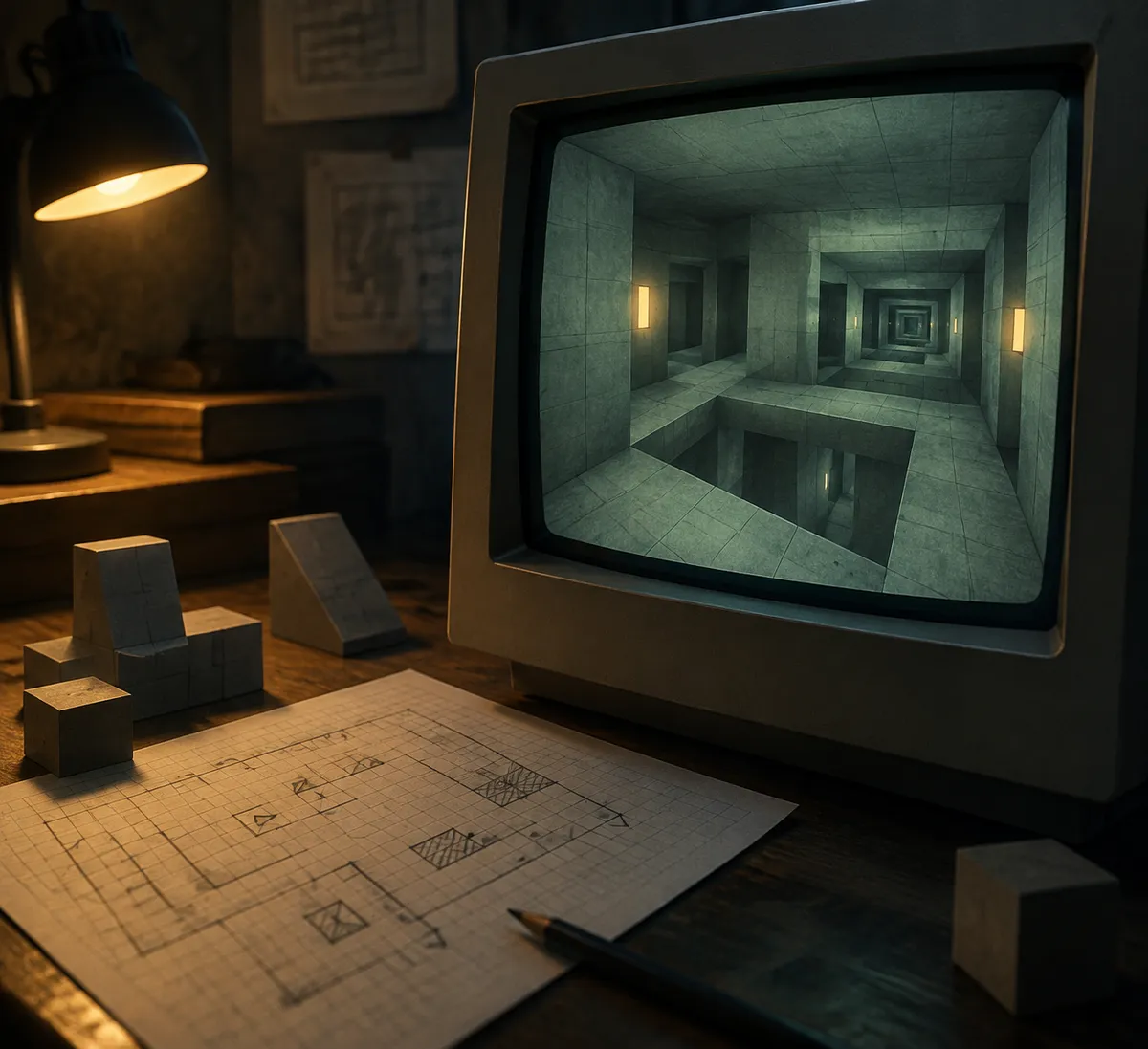
Tomb Raider III's UFO level is one of those places players remember not for a boss or a puzzle, but for how wrong the space feels. Space.com recently published a piece on how the level's impossible geometry was made, and it's a useful springboard for anyone who wants to understand how games fake scale, logic and mystery. By the end of this article, you'll have a practical lens for spotting those tricks in any game, old or new.
A caveat up front: the details I can draw on here are limited to the broad strokes of Space.com's coverage, which centers on the design tricks and technical creativity behind making surreal spaces feel playable. I won't claim specifics about the level's internal construction beyond that. What I can do is give you a framework for thinking about it.
Why the level still feels unsettling
The UFO level is remembered as a mind-bending stretch of the game. Per Space.com, its geometry is famously impossible, and that's the key to its staying power. Most game levels want you to build a mental map. This one quietly sabotages that habit.
That's a design choice with a clear payoff. When a space refuses to add up, you stop trusting your instincts, and a sci-fi alien setting is the perfect excuse. A confusing hallway in a warehouse feels like a bug. A confusing hallway in an alien craft feels like the point.
Constraints drove the creativity
The broader story here is about older hardware and limited tools. Space.com's angle, as I read it, is that constraints pushed designers toward inventive worldbuilding rather than away from it. When you can't simulate everything, you decide what the player needs to believe, and you build only that.
That's a useful principle outside of Tomb Raider. Limits force clarity. A designer with a small toolbox has to ask what single trick will create the feeling they want, then commit to it.
How to spot "impossible space" tricks in any game
You don't need the developer's notes to start analyzing a level. Here are things to look for the next time a game's geometry feels off. These are general level design observations, not claims about how this specific level was built.
Check whether the map matches your memory
Walk a loop and note where you end up. If you return somewhere that doesn't line up with where you expect to be, the game is bending space on you. Sketch the route on paper if you want proof.
Watch what the game hides
Impossible spaces rely on controlling what you see at any given moment. Corners, doors, loading transitions and darkness all do the job of covering seams. Notice where your view is restricted, because that's usually where the trick lives.
Notice how scale is suggested
Games fake size with cues: distant shapes, big openings, repeated structures. The space doesn't have to be large, only to read as large. Compare how big a room feels with how long it takes to cross it.
Pay attention to logic breaks
When a route that should be a straight line curves, or two areas that should be separate overlap, that's deliberate. Ask what the break accomplishes: disorientation, tension or surprise.
What modern level designers can take from it
Space.com's framing suggests the level is a strong example of constraints producing memorable results. Several takeaways follow, and they're my analysis rather than reported fact:
- Pick one unsettling idea and build around it. A single strange rule is more memorable than a pile of effects.
- Let the fiction justify the weirdness. An alien setting gives players permission to accept spaces that would otherwise break immersion.
- Keep it playable. The level is remembered as surreal but still navigable. Strange is only fun if players can still make progress.
- Use limits as a creative brief. Fewer tools can mean a sharper vision.
Why this is worth revisiting now
Retro design is getting renewed attention as players and creators look back at how older hardware produced memorable experiences with limited tools. Tomb Raider III's UFO level fits neatly into that conversation, and it's a good case study if you make videos, write about games, or design levels yourself.
If you're replaying it, try this: play it once for the experience, then again with a notebook. Mark where you think you are, and see how quickly the level proves you wrong. That's the fastest way to learn what impossible geometry actually does to a player.