
Every strategy gamer knows the dilemma: spend your budget on a few devastating elite units, or flood the map with cheap ones. This week, that exact tradeoff showed up in real-world defense news, and it's a useful lens for how you play.
Per Fox News, the Pentagon is pushing hard on hypersonic weapons as the U.S. tries to rebuild missile stockpiles and keep pace with China and Russia. The cost problem is the story. Dark Eagle missiles could cost over $40 million each, according to the report, while startups like Castelion say they aim to build hypersonic weapons for under $500,000 apiece. Rocket Lab is also named as a company working to cut costs and speed up testing.
This is a news story about real weapons, and it deserves a sober read. But the logic behind it maps neatly onto the decisions you make in strategy games, so that's the angle here.
The real-world version of "elite vs. spam"
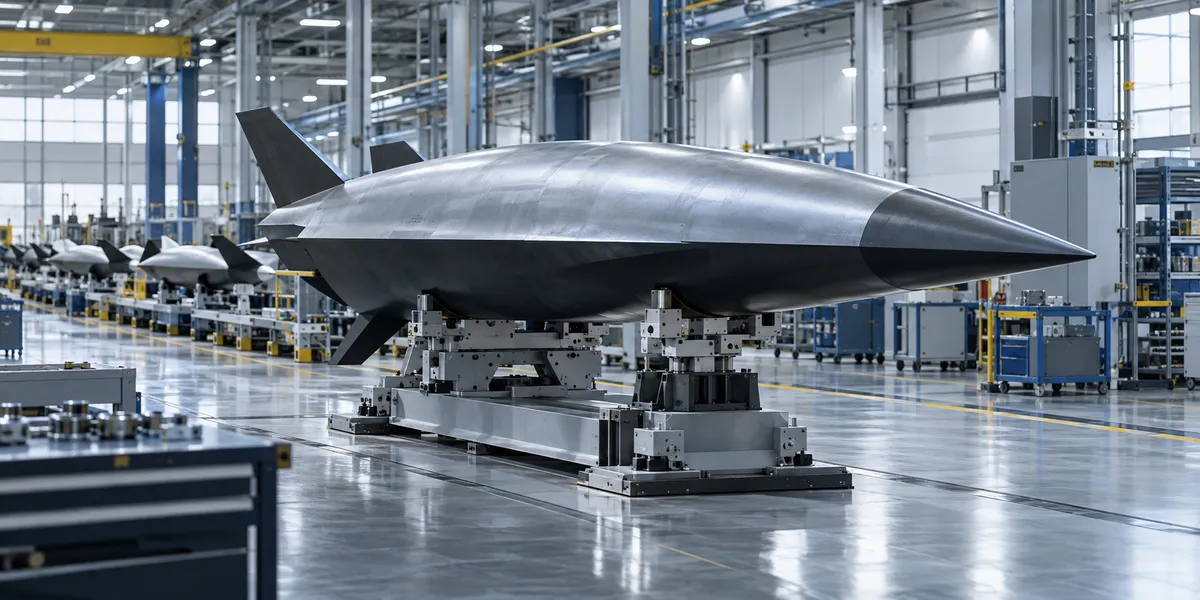
Fox News describes a shift away from "exquisite," ultra-expensive systems toward lower-cost weapons that can be produced at scale. Traditional hypersonics can cost tens of millions of dollars per missile and are hard to build in volume. With global missile demand rising and U.S. inventories under pressure, that's a problem: a weapon you can only afford a handful of is hard to rely on.
Sound familiar? It's the late-game hero unit that costs a fortune and dies to a pile of cheap counters. The report's central point is that quantity has a quality of its own, and that cheaper production could reshape how defense procurement works.
Lesson 1: Know what you can afford to lose
A unit's price isn't just resources. It's how much you hesitate before using it. If one loss wrecks your economy, you'll hold it back, and an unused unit does nothing.
The same applies to a missile priced at tens of millions. A cheaper weapon changes how freely it can be used, tested, and replaced. In your next match, try this check before queuing an expensive unit: if it dies in its first fight, can you still recover? If not, you may be building a trophy, not an army.
Lesson 2: Faster testing beats perfect planning
Part of the startups' pitch, per the report, is speeding up testing. Cheaper hardware means more tries, and more tries mean faster learning.
Gamers do this instinctively. You replay a build order five times, tweak one variable, and see what changes. The practical habit to borrow:
- Change one thing per attempt (an opener, a unit mix, a timing).
- Keep your attempts short and cheap, such as custom matches against AI, rather than only high-stakes ranked games.
- Write down what failed. Patterns show up quickly.
Lesson 3: Stockpiles are a resource, not a number
The push for cheaper hypersonics is partly about stockpile limits. Rebuilding inventory takes production capacity, not just money. Strategy games model this with build queues and supply caps, and the lesson holds: a big bank balance means little if your factories can't turn it into units.
Check your own production capacity each time you plan a big push. Resources sitting unspent are a sign of a bottleneck you haven't fixed.
Lesson 4: Speed is powerful, but it isn't everything
Hypersonic weapons are fast and maneuverable, which makes them hard to track. Fox News frames them as a central piece of next-generation deterrence. The same coverage points to lingering risks: escalation, accuracy, and those stockpile limits.
The game parallel is the fast-moving unit that looks unbeatable until you realize it can't hold ground, or that a scary-looking threat pushes your opponent into an aggressive response. In games, you can usually restart. In reality, the escalation concern is serious, and it's the reason this story isn't just about cheaper hardware.
That's our analysis, not a claim from the report, but it's a reasonable takeaway: any capability that is fast and hard to detect changes how the other side reacts, whether on a battlefield or a ranked ladder.
What we don't know yet
The report describes goals, not proven results. Castelion's under-$500,000 figure is what the startup aims for, not a confirmed production price. Whether low-cost hypersonics can match the performance of the expensive versions remains open. Treat the numbers as targets until real production data appears.
That caution is good gaming practice too. A patch note promising a balanced unit isn't the same as seeing it hold up in thousands of matches.
Your takeaway
Before your next strategy session, audit your army composition: find the one expensive unit you're protecting too much, and test a cheaper, more numerous alternative in three quick matches. Let the results, not the prestige of the unit, decide what stays.