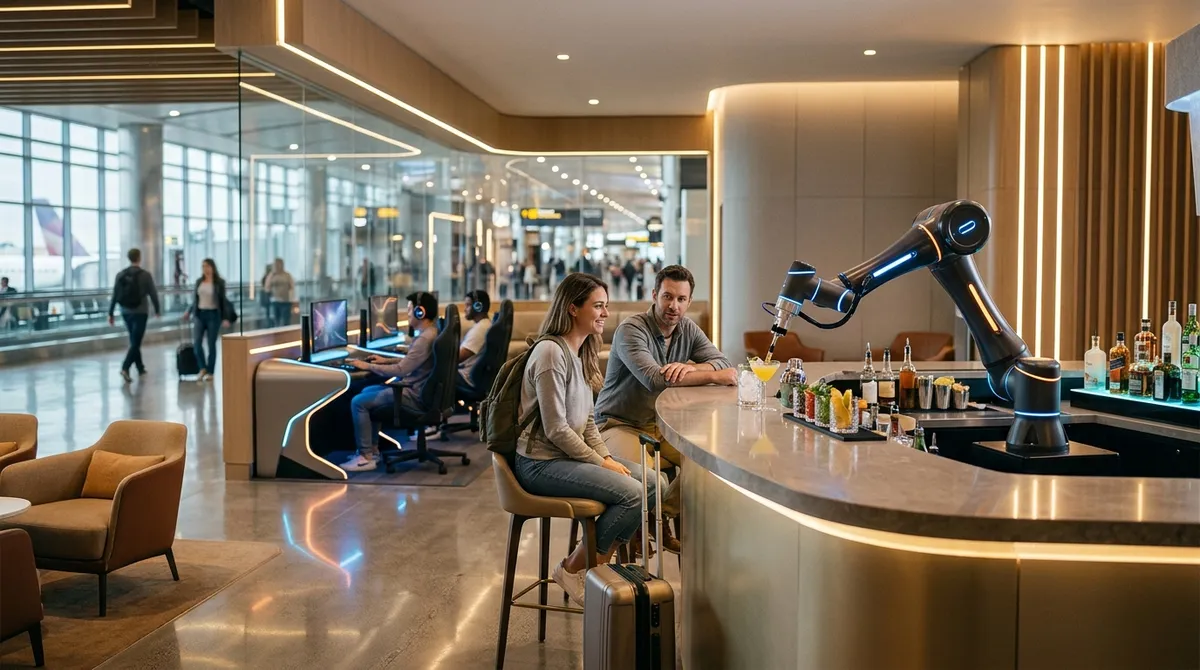
Airport Gaming Gets an Automated Upgrade
Minneapolis-St. Paul International Airport is taking airport entertainment to the next level with The Portal Lounge, a new video game lounge that combines gaming stations with an eye-catching robot bartender. According to reports, the facility offers 17 plug-and-play gaming stations alongside food service, signature drinks, and comfortable seating areas.
The Portal Lounge Experience
The Portal Lounge represents a significant investment in passenger experience, offering travelers multiple ways to spend their time during layovers or delays. The 17 gaming stations provide plug-and-play functionality, meaning travelers can jump into games without complex setup procedures. Beyond gaming, the lounge features a full menu of food options and signature drinks, plus dedicated seating areas for those who prefer to relax without gaming.
The standout feature is undoubtedly the robot bartender, which adds a technological novelty to the traditional airport lounge experience. This automated service represents the intersection of hospitality technology and entertainment, creating a unique draw for tech-savvy travelers.
Airports Compete on Experience
The Portal Lounge reflects broader trends in the aviation industry, where airports are increasingly competing on passenger experience rather than just operational efficiency. As travelers seek ways to make delays and layovers more enjoyable, facilities like gaming lounges tap into multiple cultural trends, including the growth of esports culture and the integration of robotics in hospitality settings.
This shift toward experiential travel means airports are investing in amenities that go beyond basic services. Gaming lounges, in particular, serve multiple demographics – from dedicated gamers to casual players looking for entertainment during travel downtime.
Technology Meets Hospitality
The combination of gaming stations and robot bartending service positions The Portal Lounge at the forefront of airport innovation. The plug-and-play gaming setup removes barriers that might prevent travelers from using gaming facilities, while the automated bartender provides both functional service and entertainment value.
According to reports, the lounge caters to various preferences, offering spaces for active gaming as well as areas for travelers who simply want to sit and relax. This flexibility makes the facility accessible to a broader range of passengers beyond dedicated gaming enthusiasts.
Future of Airport Entertainment
The Portal Lounge raises questions about whether gaming lounges represent the future of airport downtime entertainment. As gaming culture becomes increasingly mainstream and technology integration becomes more common in hospitality settings, facilities like this could become standard airport amenities.
The success of such ventures will likely depend on passenger adoption and operational efficiency. Gaming lounges must balance the appeal of cutting-edge entertainment with practical considerations like turnover rates, maintenance requirements, and space utilization in busy airport environments.
Setting New Standards
MSP Airport's investment in The Portal Lounge demonstrates how transportation hubs are evolving to meet changing passenger expectations. The combination of gaming entertainment, food service, and technological novelties like robot bartenders creates a comprehensive experience that transforms waiting time into active entertainment.
For the gaming industry, airport lounges represent a new venue for reaching audiences who might not typically visit dedicated gaming facilities. The accessibility and novelty factor of airport gaming could introduce new players to gaming culture while providing familiar entertainment for existing enthusiasts.
The Portal Lounge at Minneapolis-St. Paul International Airport represents more than just a new amenity – it signals a shift in how airports approach passenger experience and points toward a future where travel delays become opportunities for entertainment rather than inconvenience.